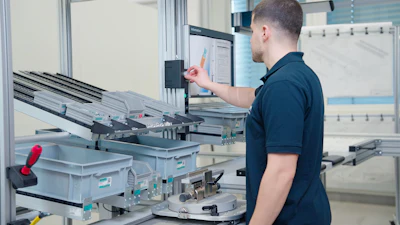
A key trend we see among many successful manufacturers is that they’re constantly evaluating modern technology that could potentially improve their operations. The solutions marketplace is constantly evolving, so it’s important to always have an eye out for what’s around the corner. Equally as important as technology that can improve throughput, though, are solutions that serve an internal purpose. Even though manufacturing as an industry is trending towards full automation, many OEMs and end-users still employ human workers on the assembly line. Many manufacturers have experienced skilled labor shortages within a variety of sectors, which underscores the importance of empowering workers with the necessary tools they need to accomplish their daily tasks.
Ergonomics has been, and should continue to be, a foundational consideration for ensuring worker productivity and safety. Manufacturers shouldn’t assume a “one-size-fits-all” mentality when evaluating workplace design. Different body types and different tasks require appropriate solutions that can be customized to the individual performing those duties. Here are four key questions that should guide how employers design and provide appropriate resources for their manual workforce.
What’s the Optimal Working Height?
There are obviously a variety of tasks that occur within manufacturing, but for those who are working at a fixed location, like a desk or workstation, the physical setup of those areas can go a long way to promoting efficient operations. Studies have shown that a combination of sitting and standing throughout the day is the optimal basis for healthy operations. While standing, the average optimal height for working is roughly 44-48 inches (depending on height), while 28-44 inches is the typical range for a sitting/standing environment. That means having an adjustable desk or workstation to accommodate the various tasks can be a useful asset to have, which includes a chair that can properly support an employee’s posture. If an employee operates with poor posture, studies have shown that their productivity can suffer.
 Bosch Rexroth
Additionally, workstations that include high-quality aluminum framing can be adjusted or repurposed for additional needs, which further provides value to manufacturers who are cognizant of their bottom line and are looking for a return on their investment.
What Are You Looking At?
Another important consideration for workers is how they can see the items in their workspaces. Obviously, having adequate lighting helps with every application, but it’s also important to set up workstations and monitors so that employees don’t have to have to change their depth or field of vision. If all tasks can be set up within a roughly 30° field, that represents the optimal range of vision, with 70° representing the entire recommended field with which to work. If possible, try to avoid setting up workstations that require a constant mix of extreme close-up vision followed by tasks at arm’s length, which can potentially cause eye strain. Also, it’s important to consider the color of the surface on which tasks will be performed. If the product is transparent and the surface is white, that can make identifying flaws difficult, compared to if the surface were a darker color like black or grey.
Where Are You Moving?
For employees who need to move throughout their daily operations, it’s important to consider how far they’re reaching and bending, especially for highly repetitive tasks. Musculoskeletal injuries are one of the leading causes of missed time at work, and by reducing their likelihood, employers can keep employees healthy and on task.
If employees are at a fixed workstation, most of the movement should be confined to the area directly in front of them, with a lower percentage requiring some measure of twisting or reaching, which can cause strain, similar to the field of vision noted above.
The same concept applies to lifting. Objects that have the heaviest weight should be placed or kept on racks or shelves at torso height to avoid having to hoist items up to a higher shelf or having to bend to place them on a lower one. If those actions are required, it’s important to maintain good posture and bend at the knees instead of at the waist. Also, if carrying items by the handle (like you would a suitcase), try to do so with a lighter item in each hand, as opposed to a singular heavy item in one hand, which can adversely affect posture.
How Will It Fit into Your Factory Floor?
The three previous questions are the foundation for the fourth and final one regarding ergonomics: planning. Manufacturers need to have a comprehensive understanding of where and how their employees are operating and, in keeping the previous tenets in mind, design solutions that can cater to those needs. Fortunately, modern design software exists to help manufacturers realize those goals. Hands-on programs like Bosch Rexroth’s free MTpro allow users to design and place ergonomic solutions in a replica layout of their factory floor to see exactly how much space those resources require. This helps promote lean manufacturing practices and optimize floor space, which is often at a premium in modern operations. Design software also helps eliminate the possibility of purchasing solutions that can’t fit or be scalable, which represent a limited return on investment.
 T.J. Kusnierek, Sales Product Manager – Shopfloor Solutions, Bosch RexrothBosch Rexroth
Ultimately, ergonomic solutions help manufacturers protect their most valuable assets – their employees. Because of the flexibility of aluminum framing and the innovation of digital design tools, these solutions can be created and retrofitted to existing manufacturing facilities or incorporated as critical infrastructure to greenfield facilities. Either way, by keeping in mind the questions listed above, manufacturers can make informed decisions about ergonomic solutions that will keep their workers safe and more productive, which should be the top priority, regardless of the industry.