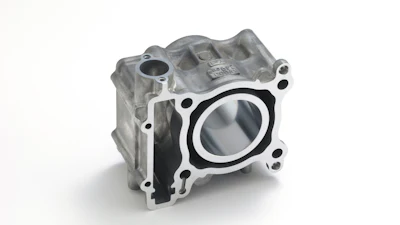
Yamaha Motor Co. announced that it will progressively switch the raw material used for its proprietary all-aluminum DiASil Cylinder from conventional virgin aluminum to recycled aluminum alloy. Once the switch has been completed for all products using DiASil Cylinders, scheduled for 2030, the transition is expected to reduce carbon dioxide emissions by approximately 47,000 tons annually.
The DiASil Cylinder is an all-aluminum cylinder design that requires neither an iron sleeve nor plating. Using its proprietary manufacturing technology, Yamaha Motor successfully developed and deployed this cylinder design in 2002, using it in a variety of Yamaha motorcycle and scooter models today. In addition to offering wear resistance, seizure resistance and heat dissipation, the DiASil Cylinder provides a variety of other benefits, including reduced weight, improved recyclability and lower manufacturing costs.
Until now, Yamaha Motor has used virgin aluminum alloy as the raw material for DiASil Cylinders. This is because conventional recycled materials contain trace amounts of impurities, making it difficult to meet the quality standards required for DiASil Cylinders in terms of metal microstructure, surface properties, corrosion resistance and other characteristics.
 Yamaha Motor Co.
The switch to DiASil Cylinders using recycled aluminum alloy will begin with commuter models produced in Indonesia, with plans for a global rollout in the future.
Yamaha Motor, in line with its Yamaha Motor Group Environmental Plan 2050, is working toward achieving carbon neutrality throughout its entire supply chain, including the company's business activities, by 2050. As part of these efforts, Yamaha Motor aims to switch 100% of the aluminum raw materials used in its own manufacturing to sustainable alternatives by 2030.