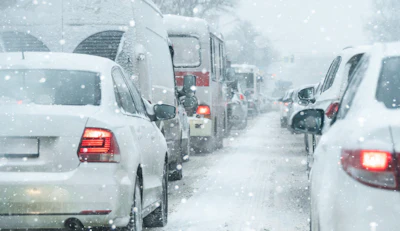
A January report from AAA discusses how winter roads can be deadly, highlighting features of your car to observe regularly. While mentioning obvious checks like tires, brakes, and fluids, it fails to mention a growing winter problem.
Advanced driver assistance systems (ADAS) are a new winter headache for many.
While those with modern cars are aware of most ADAS features their cars have, some are not prepared for the effects snow and ice have on them. Advanced driver-assistance systems, including automatic emergency braking (AEB), lane-keeping assist, and adaptive cruise control, are now standard on most new vehicles sold in the United States.
The Winter ADAS Question
As snow sweeps across the United States this winter, it is worth remembering many things about your ADAS architecture. These steps are pertinent, not least if you are a first-time owner of a late-model vehicle.
According to the National Highway Traffic Safety Administration ( NHTSA ), these technologies are designed to reduce crashes by helping drivers detect hazards and maintain safer distances. Yet, it can't be overemphasised how these systems depend on cameras, radar, and other sensors mounted in windshields, bumpers, and grilles. When those sensors are obstructed by snow or ice, systems can malfunction or even temporarily disable themselves.
Manufacturers are clear about this limitation. Owner documentation from Toyota notes that radar sensors may not function correctly if covered with snow, ice, or dirt. Furthermore, Ford Motor Company advises on its "From the Road" blog that driver-assist features may become unavailable in heavy snow.
What the Research Shows
For illustration, the Insurance Institute for Highway Safety ( IIHS ) found that the performance of forward-collision prevention systems can vary depending on road markings, contrast, and sensor clarity. The organization confirms that system features "may be problematic on roads that aren't well-marked or are covered with snow."
The takeaway is not that ADAS is ineffective. The key is that they are assistance technologies, not autonomous replacements for attentive driving. More crucially, their effectiveness depends on proper maintenance and calibration.
The ADAS Features Most Affected
Winter messes with all ADAS features to some degree, but a few take a harder hit. It is worth noting that failures usually have logical reasons. What's more, there are clues to look for to detect where these problems start, according to 1Source ADAS.
Lane-Keeping Assist (LKA) relies on a clean, unobstructed camera view. If the camera can't clearly see lane markings, it can't do its job. Before running diagnostics or scans, you can ensure the windshield camera area is completely clean. Otherwise, you're troubleshooting a weather issue, not a system fault.
Moreover, adaptive cruise control (ACC) needs its radar sensors to keep the same following distance. Therefore, checking for blockages, debris, cracks, or mounting shifts is recommended before assuming any further issues.
Automatic emergency braking might suffer from impaired sensor function, which can lead to delayed braking and horrific consequences. Consistent checking during the winter is key to making sure your AEB is in working order.
Finally, blind-spot monitors or ultrasonic parking sensors are mounted in low areas prone to debris and spray. Making sure your bumpers are clean and clear of ice and salt buildup will promote normal function in most harsh winter conditions.
The Overlooked Calibration Factor
If blocked sensors are the visible winter problem, misaligned sensors are the invisible one. ADAS relies on precise calibration to interpret distance, speed, and lane positioning accurately. A forward-facing camera positioned even slightly out of specification can misjudge following distances. What's more, a radar module shifted after a minor fender-bender or bumper repair may provide inaccurate readings without triggering an obvious warning light.
"If your vehicle requires repair this winter, confirm that the facility strictly follows OEM calibration requirements. Not all repair shops are equipped with the necessary technology or trained technicians, and proper ADAS calibration demands specialized equipment, controlled environments, and manufacturer-specific procedures," said John Voulgarakis of Lighting Auto Service.
Industry groups such as the Automotive Service Association stress that calibration is required after many common repairs, including:
- Windshield replacement involving camera removal
- Front or rear bumper repairs
- Suspension or ride-height changes
- Wheel alignment
- Structural collision repairs
Modern calibration procedures are highly technical. They require level shop floors, precise target placement, controlled lighting, and manufacturer-specific scan tools. Improper calibration can result in a vehicle that appears normal to the driver while operating outside design tolerances.
As more vehicles are equipped with ADAS, calibration has shifted from a niche specialty to a mainstream safety requirement. Collision industry analyses indicate that a substantial portion of repairs on late-model vehicles now involve at least one ADAS calibration procedure. For drivers, that means calibration is no longer optional: it is part of restoring a vehicle to pre-accident safety performance.
Why Winter Ups the ADAS Ante
Also, temperature swings can affect mounting brackets and adhesives; for instance, minor low-speed impacts in icy parking lots may shift sensor housings. Meanwhile, snow accumulation can conceal damage to bumper covers where radar modules are located. Even routine windshield replacement during cold weather must account for proper camera alignment before the vehicle returns to service. At the same time, snow-covered roads reduce lane visibility and contrast, placing greater demand on already stressed sensor systems.
A properly calibrated camera has the best chance of accurately interpreting faint or partially obscured lane markings. A misaligned one does not. Unfortunately, the difference may not be obvious to the driver until a system disengages unexpectedly or fails to detect a vehicle ahead as intended.
Practical Winter Guidance for Drivers
For motorists navigating winter in 2026, the approach to ADAS should be proactive, according to ADAS Solutions USA. For one, keeping sensors clean should be a priority. When necessary, clearing snow and ice from grilles, bumpers, and windshield camera areas before driving is the smart move.
Furthermore, if a warning message appears indicating sensor blockage, inspecting and cleaning the area safely should help. Treating warning lights seriously makes sense, as persistent ADAS alerts may signal more than a temporary obstruction. They can indicate the need for inspection or recalibration.
In the event of an accident, one should always confirm calibration after repairs. After windshield replacement, collision repair, or alignment work, ask whether ADAS calibration was performed according to the original equipment manufacturer (OEM) specifications.
Perhaps the most important step in making your car safe this winter is choosing qualified ADAS service providers. ADAS calibration requires specialized equipment, flat calibration bays, and trained technicians with experience. Facilities that invest in proper ADAS calibration capabilities are better positioned to restore systems accurately.