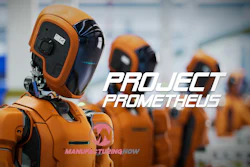
Robotics and automation dominate industrial innovation conversations across industries and time zones. Fair enough—it’s not hard to see why robots capture the imagination.
But I think the application of industrial AI that will make the biggest impact in the year to come is something a little less glamorous. A little less glossy. But with huge potential to cut costs and boost growth: inventory overhaul.
Across heavy manufacturing, utilities, shipping & logistics, supply chains, and field operations, companies are quietly sitting on millions—sometimes billions—of dollars of unused, duplicate, or misclassified inventory. Demand remains strong. Supply chains are operational. Suppliers are navigating turbulence to deliver on work orders. But firms simply can’t see what they already own.
It’s not sexy, but it’s a make-or-break crisis hiding in plain sight. If asked to list the biggest supply chain pressures they worry about, firms are more likely to look outwards: supply chain shocks, tariffs, geopolitical uncertainty, labor shortages. Those forces have a material impact, but we can’t overlook a harder truth: a major share of industrial waste is self-inflicted.
Low Visibility Comes at a High Cost
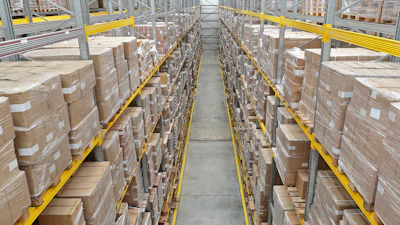
Invisible waste means inventory that physically exists but can’t be reliably found, matched, or trusted. Think parts sitting on shelves across factories, warehouses, storage yards, and service trucks while procurement systems—usually appropriated ERP or CRM platforms—insist they’re unavailable.
There are costly real-world implications here across the industrial economy. Teams re-order components that already exist because the catalog describes the same item 10 different ways. Capital is locked up in assets marked as “just in case” because no one is confident enough to confirm what’s on hand or which department, truck fleet, or factory location owns it.
The result is a massive overhang of excess inventory.
To give a sense of scale, it’s common for an automotive equipment manufacturer to rely on 18,000 suppliers for a car model that requires 20,000 parts. Thousands of suppliers. One vehicle off the assembly line. Without organization, there is a crisis of duplication, misclassification, and lost inventory in waiting.
For industrial leaders with global remits, it’s a strategic weak spot with job security and hundreds of millions, if not billions, of dollars at stake.
AI Was Made to Solve These Problems
We’re entering a year in which AI is moving decisively from the office to the physical world: factory floors, hangars, warehouses, and the field. New data centers are coming online specifically to support AI’s growing appetite for compute. I see this movement as extremely positive from both a technical and societal standpoint.
As Nvidia’s Jensen Huang recently said, Physical AI is becoming practical at a rapid clip and could achieve its ChatGPT moment in the coming months. The question is, where to deploy it first?
When AI enters the industrial tech stack to streamline inventory management, I know we’ll see a big shift across the industrial enterprise.
Procurement will stop operating in panic mode. Maintenance teams will locate parts they didn’t know they had. Capital expenditure will drop without sacrificing resilience. And leaders will regain confidence in decisions that were previously made defensively, based on patchy information and theoretical scenarios.
I’ve seen this pattern before. Earlier in my career, I worked on applying AI to accounting and legal workflows—domains that were also drowning in data but starving for organization. The breakthrough in those sectors came from letting AI do what it does best: organizing insane amounts of disjointed data and completing mountains of tedious, error-prone work in seconds that would take humans days or weeks.
Solving Inventory Excess Reflects Well on Everyone
Today’s AI can ingest messy, decades-old inventory data, and do what humans can’t at scale. Like grouping equivalent components, reconciling conflicting descriptions, surfacing duplicates, and assigning accountability. It can use reasoning, context, and comparison techniques to decipher that ten different part numbers likely describe the same physical object. It can flag excess hiding across locations. And it can do this continuously, instead of a one-off clean-up exercise that degrades the moment consultants leave.
The technology needed to solve the invisible waste problem already exists. What’s been missing is the visibility, and a willingness from the top to accept that the problem might be self-inflicted.
The next phase of industrial AI will be defined by how much clarity companies gain over what they already own and how that translates to boosting efficiency and easing budget constraints. It might not be as eye-catching as humanoid robots. But, done well, overhauling inventory management could be the million-dollar opportunity that execs didn’t even know they were sitting on.
Kriti Sharma is CEO of IFS Nexus Black.