At its GM Forward media event in New York, General Motors showcased how manufacturing scale, software expertise, and AI are converging to transform the car from a mode of transportation into an intelligent assistant.
Chair and CEO Mary Barra and other senior leaders unveiled advancements across AI, robotics, energy, and autonomy, showing how the company is evolving into a new era of transportation.
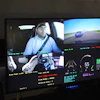
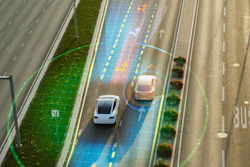
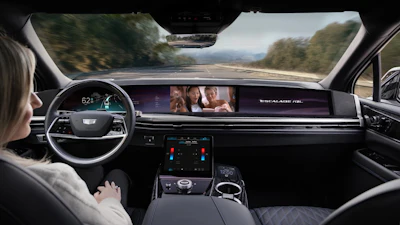
One of the most significant steps toward that future is autonomy. GM announced plans to bring eyes-off driving to market in 2028, debuting on the Cadillac ESCALADE IQ electric SUV.
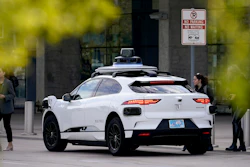
GM has already mapped 600,000 miles of hands-free roads in North America, and customers have driven 700 million miles with Super Cruise without a single reported crash attributed to the system. Additionally, the technology and validation frameworks from Cruise add more than five million fully driverless miles of experience.
Beginning next year, GM vehicles will feature conversational AI with Google Gemini, making it possible to talk to your car. In the future, GM will introduce its own AI, custom-built for your vehicle. With your permission, it will be fine-tuned with your vehicle’s intelligence and your personal preferences, all connected by OnStar. This could include explaining one-pedal driving in your new vehicle, spotting a maintenance issue early, or finding the perfect place for dinner en route to your destination.
In 2028, GM will debut a new centralized computing platform, starting with the Cadillac ESCALADE IQ. This will be a full reimagining of how vehicles are designed, updated, and improved over time. Built to power both EVs and gas vehicles, the update unites every major system — from propulsion and steering to infotainment and safety — on a single, high-speed computing core.
The result: 10 times more over-the-air software update capacity, 1,000 times more bandwidth, and up to 35 times more AI performance for autonomy and advanced features.
GM shared progress on how it’s scaling its robotics work at the Autonomous Robotics Center (ARC) in Warren, Michigan, and a sister lab in Mountain View, California. More than 100 roboticists, AI engineers, and hardware specialists are building advanced robotics systems trained on decades of GM production data, such as telemetry, quality metrics, and sensor feeds from thousands of robots, to create AI that learns and improves with every manufacturing cycle.
ARC is also developing software and manipulation components for collaborative robots, or “cobots,” which GM is deploying in its U.S. assembly plants this year. This creates an adaptive and efficient manufacturing environment where intelligent machines improve safety and workplace quality.