Detroit Diesel, a subsidiary of Daimler Truck North America, recently announced the return to a shift model, the recall of laid-off workers and new jobs. While the UAW attributed the move to strategic tariff pressures, the company called it more of a planned response to growing demand for powertrain products. Demand is likely increasing, at least in part, due to tariffs imposed by the Trump Administration late last year.
On November 1, 2025, the U.S. imposed a 25% tariff on imported medium- and heavy-duty vehicles and key components.
At the time, the UAW called it a "major win" for UAW members who build heavy trucks at Mack, Daimler, Navistar and Volvo, and took partial credit for the tariffs following a "massive grassroots lobbying campaign by UAW members and leaders."
A Daimler spokesperson told Industrial Equipment News (IEN) the decision to reinstate the company's previous shift model for Heavy-Duty Engine Platform (HDEP) assembly in Detroit is a "planned response" to growing demand. Detroit Diesel, Daimler's powertrain brand and a U.S. manufacturer of heavy-duty engines and commercial vehicle components, recently introduced a new Gen 6 engine portfolio compliant with the EPA’s 2027 emissions standards.
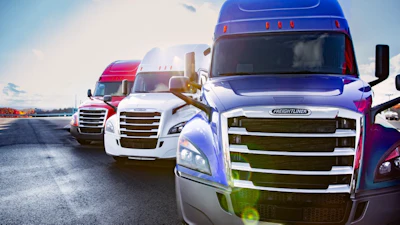
Detroit Diesel makes diesel and electric powertrains and safety systems, and provides connected-vehicle services exclusively for Freightliner and Western Star commercial trucks. Both truck brands are owned by Daimler.
"Following last year’s slowdown in the heavy‑duty truck market, increased truck volumes and strong customer preference for our integrated Detroit engines, axles and transmissions are driving this ramp-up," the spokesperson said.
Commercial truck sales declined significantly last year, according to the National Automobile Dealers Association (NADA), as the market saw a 13.6% decline.
Recent Expansion in Redford, Michigan
All Detroit engines, transmissions and axles are built at the company's campus in Redford, Michigan, which is also home to Daimler's engine and component R&D. The site employs more than 2,000 people and has operated in Michigan since 1938.
Detroit Diesel recently received a $285 million investment, supported by the Michigan Economic Development Corp. (MEDC) and the Michigan Strategic Fund, to enable the production of Gen 6 engines. The $285 million project was designed to expand and diversify the production of internal combustion engine (ICE) and zero-emission vehicle (ZEV) components for medium- and heavy-duty trucks, potentially creating up to 436 new jobs.
The MEDC said the investment could help diversify the state's supply chain beyond light vehicles to meet growing demand for cleaner, more fuel-efficient engines and components.
UAW’s Role in Worker Recall
Daimler Truck North America maintains a strong U.S. manufacturing footprint, with major facilities across multiple states.
"Our production strategy includes built‑in flexibility to respond to market conditions, though such adjustments require thoughtful planning and alignment of resources," said the Daimler spokesperson. "We continue to monitor the evolving trade environment. While tariffs can introduce complexity into cross-border logistics, we maintain contingency plans to minimize potential disruptions and ensure timely delivery of vehicles across the U.S., Mexico and Canada."
The UAW credits the newly imposed tariffs for Detroit Diesel’s worker recall and the creation of new jobs. "In October, after months of lobbying, the federal government imposed a 25% tariff on heavy truck imports to prevent further offshoring and drive investment in the U.S. heavy truck industry,” the UAW said in a statement. “The move is the latest win for UAW members in the union’s fight for reshoring and reinvesting in good union jobs."
In 2025, workers at the Detroit Diesel Axle unit voted to ratify a new contract that included profit-sharing and cost-of-living adjustments for the first time after authorizing a strike.
“Strategic, targeted tariffs are an important tool in the toolbox to undo the damage of our free trade disaster and bring back good union jobs to the U.S.,” said UAW President Shawn Fain in a statement. “Companies like Detroit Diesel and their parent company, Daimler Truck North America, need to step up to reinvest in the workers who make the product and stop laying off American workers while making billions in profit. We applaud this first step in the right direction.”
Commercial trucks face unique challenges in transitioning to more efficient technologies, including infrastructure, performance, reliability, cargo type, distance traveled and terrain.